Advertisement

Saturday, 8 March 2014

Samsung S5 release


The Samsung Galaxy S5 will be replacing the Galaxy S4 as the company’s flagship smartphone and it will be doing so in style. The device comes with a brand new design that Samsung says gives its a “glam” look. The design is also dust and water resistant which means that users can feel comfortable taking it in rugged environment.

Samsung’s new flagship also features Android 4.4 Kit Kat, an assortment of new Touch-wiz software features, a new 16 MP camera, a speedy processor, and a large 5.1-inch display. It also comes with a fingerprint reader inside its home button for added security and convenience.

The Samsung Galaxy S 5 is shaping up to be another stellar smartphone, and probably the best Android device of 2014. However, Samsung has something else on the horizon, and that is the Galaxy F. Taking a new approach to the design and finally offering a metal-clad smartphone.

Launchpad: Panasonic P31


The Panasonic P31 is a phablet that aims to cash in on the Japanese brand’s “Play Life, Ur Way” tag line.The P31 has a 5-inch screen powered by a 1.3GHz Quad Core smartphone. The phone will run Android Jelly Bean and has a 8MP Full HD capable Autofocus camera. The battery seems decent at 2000 mAh battery. The smartphone will be available to consumers in India from the second week of March, 2014  and will cost Rs 11, 990.

The phone will be the first to feature Panasonic’s “Play Life” bouquet of features giving the customers a customizable user experience, where smartphone understands gestures, organises the music library and let’s one multi-task while watching videos.
The phone also has an “Ultimate Saver” that switches battery use modes to conserve power.

Friday, 6 September 2013

Audi Sport Quattro Concept

Powerful design inspired by motor sport
Plug-in hybrid drive developing 515 kW (700 hp) of system power
Impressive performance with low fuel consumption: 0-100 km/h in 3.7 seconds, 2.5 liters per 100 kilometers (94.09 US mpg)
SQC130018 medium Audi Sport Quattro Concept
Quattro is Audi and Audi is Quattro
The brand and the technology are indelibly linked. In celebration of the 30th birthday of the Sport Quattro, Audi will present its legitimate successor at the 2013 IAA in Frankfurt am Main. The Audi Sport Quattro concept show car continues the grand Quattro tradition, with a stunning coupe design and plug-in hybrid drive with a system output of 515 kW (700 hp).
SQC130013 medium Audi Sport Quattro Concept
Quattro is more than just a technology – Quattro is a philosophy. The term stands for driving safety and sportiness, technical competence and a dynamic approach to life. Since the debut of the “Ur-quattro” in 1980, Audi has sold more than five million cars with permanent all-wheel drive, far more than any other premium manufacturer worldwide. The strengths of the Quattro concept and its successes in racing have been impressively displayed for over three decades now.
One legendary Audi classic is the Sport quattro, which made its debut at the 1983 IAA and was designed as a homologation model for the World Rally Championship. With 225 kW (306 hp) and many technical innovations, it was the supercar of its day. The short wheelbase, which honed the handling, gave the Sport quattro an unmistakable look. The competition car wrote racing history. Walter Röhrl drove it to a convincing victory in the 1987 Pike’s Peak International Hill Climb in Colorado, U.S.A.
SQC130015 medium Audi Sport Quattro Concept
Exterior design: powerful and eye-catchingWith the Audi Sport Quattro concept show car, Audi is bringing this grand tradition into the present and taking up ideas again that were first seen in the Audi Quattro concept study three years ago. The coupe combines the DNA of the Ur-quattro with dramatic elegance. It has a powerful, intense road stance, its body tautly perched over the 21-inch wheels. The overhangs are short, the proportions sportily balanced.
With a wheelbase of 2,784 millimeters (109.61 in), it is 4,602 millimeters (181.18 in) long. With 1,964 millimeters (77.32 in), the two-door model is very wide and at just 1,386 millimeters (54.57 in) unusually low-slung.
Like the Audi Sport quattro, the Audi Sport quattro concept was designed in the spirit of racing. None of its design solutions are an end unto themselves. Each is driven by a technical function, and several are an homage to the quattro models of the early 1980s. These include the angular, flat C-pillars and the rectangular double headlights featuring Audi’s groundbreaking Matrix LED technology, which will be available by the end of this year in the refreshed Audi A8.
Two very flat structures are visible inside the headlight. The wrap-around daytime running lights together with the central low-beam units and the Audi Matrix LED make for a sporty, determined look. The headlights and tail lights are a reinterpretation of lightweight construction. The headlights forsake fascia, exposing the LED heat sinks, while the tail lights reduce glass and housing to a minimum.
The LED high-beam unit of the Audi Matrix LED headlights is comprised of numerous individual diodes. The individual LEDs, which work in tandem with upstream lenses and reflectors, always deliver excellent illumination. They are activated, deactivated or dimmed individually according to the situation. With the number of LEDs, their arrangement and the size and design of the headlights, the new technology offers many fascinating possibilities.
Another design homage are the “blisters” above the fenders. The Audi designers have reinterpreted and strongly accentuated these lines. They give the body even greater emotional appeal and broad shoulders. Throughout the car, sharp contours frame tautly muscular surfaces. With their interplay between convex and concave curvatures, the engine hood, fenders and flanks define the athletic character of the Audi Sport Quattro concept.
SQC130014 medium Audi Sport Quattro Concept
New details: the single-frame grilleThe front of the show car is characterized by the hexagonal single-frame grille with a new, sculpted grille insert, a typical element borrowed from racing. Its lower section is virtually vertical; the upper section follows the line of the engine hood. The low grille emphasizes the width of the car. Two large, vertical blades divide each of the large air inlets, and their form is taken up by the creases in the engine hood. The CFRP splitter is shifted far to the front, as on a race car. The grille is part of Audi’s new design philosophy and provides a first glimpse at the future design of the sporty production models.
The proportions of the rear of the car are defined by the combination of a flat greenhouse and broad shoulders. The spoiler at the lower edge of the rear window underscores the car’s width. Another distinctive element at the rear of the show car is the CFRP diffuser, which extends far upward. Similar to the single-frame grille, its upper section is honeycombed, whereas the lower section houses two large, oval tailpipes. Mounted on a black CFRP facing, the tail lights are rectangular – a typical quattro styling cue – and emphasize the width of the car. A spoiler extends from the rear hatch at higher speeds. The luggage compartment, which is reinforced by a solid crossbeam beneath the rear shelf, has a capacity of 300 liters (10.59 cubic ft).
Precisely penned details round out the dynamic look of the Audi Sport Quattro concept. The flared sills are made of CFRP; the power door handles extend automatically to meet an approaching hand. The four rings adorn the front, the rear, the air outlets behind the front wheels and the C-pillars. The center-locking wheels feature a five twin-spoke design.
SQC130016 medium Audi Sport Quattro Concept
Interior: racing meets elegance
The concept of elegant sportiness carries over to the interior of the Audi Sport Quattro concept. The spacious cabin is awash in dark gray tones and precise lines.
The interior is focused on the driver. The steering wheel, digital instrument cluster and head-up display are all in the direct field of view. A line running below the windshield encircles both the driver and passenger and integrates all ergonomic functions such as the door openers.
SQC130017 medium Audi Sport Quattro Concept
The lightweight construction typical for Audi is reflected both in the design and in the choice of materials. Viewed from above, the slim dashboard is reminiscent of the wing of a sailplane. The support structure of the interior is a carbon shell that also serves as a storage compartment in the side doors. Elements like this make lightweight construction visible.
The quattro drivetrain runs beneath the continuous center console. Sporty racing bucket seats with folding backs, sculpted side bolsters and integrated head restraints up front and full rear seats offer space for four. The folding mechanism provides access to the rear. A crossbeam behind the rear seats provides for additional rigidity.
Great attention to detail is reflected in both the choice of materials and the workmanship. The multifunction sport steering wheel provides a glimpse into future sporty production models.
The control concept is also focused on the driver. All important information is displayed in the fully digital instrument cluster, another show car feature. The multifunction sport steering wheel is used to switch between a number of virtual 3D displays.
Choices include a Race mode with central speedometer, track information and a stopwatch, for example, or the Setup mode with detailed information about numerous race tracks. In addition, the touchwheel of the characteristic Audi MMI control unit makes it easy to enter information.
Another highlight is the innovative air conditioning control unit, which is integrated directly into the air vents. Temperature, intensity and air flow can be controlled using one and the same element. The display in the vents shows either important media information or the air conditioning settings.
Powerful performance: the plug-in hybrid driveThe plug-in hybrid drive makes the Audi Sport quattro concept a breathtakingly dynamic coupe. System output is 515 kW (700 hp); system torque is 800 Nm (590.05 lb-ft). Power flows through a modified eight-speed tiptronic to the quattro powertrain, which features a sport differential on the rear axle. According to the applicable standard, the show car consumes on average 2.5 liters of fuel per 100 kilometers (94.09 US mpg), a CO2 equivalent of 59 grams per kilometer (94.95 g/mile).
The combustion engine is a four-liter, twin-turbo V8. It produces 412 kW (560 hp) and 700 Nm (516.29 lb-ft) of torque. The cylinder on demand (COD) system, which deactivates four cylinders under part load, and a start-stop system make the sonorous eight-cylinder unit very efficient.
Located between the 4.0 TFSI and the transmission is a disc-shaped electric motor producing 110 kW and 400 Nm (295.02 lb-ft). It draws its traction energy from a liquid-cooled lithium-ion battery in the rear with a capacity of 14.1 kWh. The show car is charged via an Audi wall box, which uses intelligent charge management to ensure the optimal feed of energy to the lithium-ion battery. The Audi Sport quattro concept can cover up to 50 kilometers (31.07 miles) on electric power alone. An intelligent management system controls the interplay between the two drives as needed, and the driver can choose between various operating modes.
The customer can choose between various characteristics for the Audi Sport quattro concept depending on the operating and driving strategy. A choice of three modes is available. EV mode is for purely electric driving; Hybrid mode for maximum efficiency and Sport mode for maximum performance.
In EV mode, only the electric motor is active. With a peak electric output of 110 kW and 400 Nm (295.02 lb-ft) of torque, electric driving both inside and outside the city is possible. An active accelerator indicates the transition to hybrid operation to the driver so that he/she can consciously control the switch between electric and hybrid vehicle.
In Hybrid mode, environmental and route data are used to compute the optimal use of the electric motor and combustion engine for fuel efficiency and implement this via the operating strategy. If navigation is active, the route is optimized for efficiency. This mode also includes the ability to customize the operating strategy. If the driver wants to retain a certain amount of electric range or to drive certain route segments on electric power, they can use the Hold or Charge function to precisely adjust the charge of the battery even without charging from the power grid.
In Sport mode, the operating strategy sets the drive system for maximum power and performance. The electric boost function supports the combustion engine in all driving situations. The energy management system ensures that the battery always has sufficient charge.
When the V8 and the electric motor work together, the Audi Sport quattro concept accelerates from 0 to 100 km/h (62.14 mph) in 3.7 seconds – much like the powerful Audi rally cars once did. Its top speed is 305 km/h (189.52 mph). The lightweight construction concept also plays a large part in this dynamic performance. The occupant cell combines ultra-high-strength steel panels and cast aluminum structural elements. The doors and fenders are made of aluminum, and the roof, the engine hood and the rear hatch are made of carbon fiber-reinforced polymer. The result is a curb weight including the battery pack of just 1,850 kilograms (4,078.55 lb).
The show car’s chassis is easily able to handle the drive system’s power. Handling is as dynamic as it is stable. The front suspension features five control arms per wheel; the rear suspension follows the Audi track-controlled trapezoidal link principle. Tautly tuned springs and dampers connect the Audi Sport quattro concept firmly to the road. The dynamic steering varies its ratio as a function of driving speed. The brake calipers grip large, carbon fiber-ceramic brake discs, and the tire format is 285/30 R 21.

Thursday, 5 September 2013

Lenovo announces Yoga 2 Pro with 3,200 x 1,800 screen, slimmer design

We think we can all agree the Lenovo Yoga has been long due for an upgrade: while every other flagship Ultrabook got refreshed with Haswell, the Yoga 13 stuck around with Ivy Bridge and a relatively low-res 1,600 x 900 display. It was getting so long in the tooth, in fact, that we almost didn't recommend it in our most recent laptop buyer's guide. Well, Lenovo's finally giving us the upgrade we've been asking for, and if specs are any indication, it might have actually been worth the wait.
The new Yoga 2 takes a big step up to a 13-inch, 350-nit, 3,200 x 1,800 touchscreen, putting it well ahead of its peers, most of which max out at 1,920 x 1,080 resolution. As you'd expect, this new model runs on fourth-gen Intel Core processors (all the way up to i7), with the battery life now rated at up to nine hours. The Yoga also adds Intel Wireless Display, in accordance with the current Ultrabook spec. Equally important: the new model measures 15.5mm thick (versus 17.1mm on the original) and sheds about half a pound so that it now weighs a little over 3 pounds (3.06, to be exact, or 1.39kg). And believe us when we say that half-pound makes a difference: chalk it up to muscle memory, but we could instantly feel the difference when we picked it up for the first time. We don't remember the original ever being this thin or light.
Interestingly, though the Yoga 2 adds a backlit keyboard, it suffers from the same flaw as the original, which is that when you fold the screen back into tablet mode, you can feel your fingers pressing into the keys on the back side. (Like last time, the keyboard automatically disables in tablet mode.) That's especially curious because Lenovo also just unveiled the ThinkPad Yoga, whose keys lock up and flatten out as you fold the screen over into tablet mode. According to Lenovo, its design team had to make a tough choice between ergonomics and thinness. Right now, at least, that "Lift and Lock" keyboard setup used on the ThinkPad Yoga requires both a thicker hinge as well as extra space inside the chassis to accommodate all the bits that keep the keys clamped in place. At least as far as its consumer line is concerned, Lenovo figured customers would rather have a thinner machine than one with a self-flattening keyboard.
Some other changes: the power button is now on the the side, instead of on the front. (The previous setup apparently confused some people?) Lenovo's also added some rubber gasketing on the edge of the display, so that it holds up a bit better when you put it upside down in Tent Mode. Speaking of Tent Mode, the Yoga Pro also includes a new software utility called Lenovo Picks, which automatically detects what position the Yoga is in, and shows a list of apps that might be relevant (in Stand Mode, with the screen facing outward, you might want to use Skype or Netflix). Meanwhile, Phone Companion is an app you can use in laptop mode to copy things like documents and websites and send them to your phone in the form of a text message. Rounding out the list are Lenovo Photo Touch (photo re-touching), Lenovo Camera Man (photo filters) and Lenovo Chef (a recipe app with motion and voice control).
The Yoga 2 will be available in October starting at $1,100. Also the 11-inch Yoga 11S is getting refreshed with Haswell too, though it's unclear when it'll start shipping with those newer chips. In the meantime, we've got a sneak peek of the Yoga 2 in the form of hands-on photos (lots of 'em). Have a look and let us know what you think in the comments.

Hands On With Sony's 20.7-Megapixel Smartphone, Xperia Z1


Sony-xperia-z11
BERLIN — After trying out Sony's new lens-type strap-on smartphone cameras, we've also gotten our hands on the company's new flagship smartphone, the Xperia Z1.
The next step in Sony's ambitious Z series of devices, the Xperia Z1 sounds like a true flagship, at least on paper, and it's currently the Android market leader in several areas, most notably with its 20.7-megapixel camera.
Add in the 2.2GHz quad-core Snapdragon 800 processor, 2GB of RAM, 16GB of storage and a 3,000mAh battery, and you have a device that's on par (or better) with the likes of Samsung Galaxy S4 and HTC One. But how does it feel and perform in real-life usage?
Simple Does It
The device's design won't surprise anyone: if you've seen the Xperia Z, the Z1 will instantly be familiar to you. That's not a bad thing; we like the simplicity of both devices, and the Z1's aluminum frame (which doubles as an antenna) with curved edges makes it feel sturdier than its predecessor.


Dsc_0027


The 1080p screen, previously a weak point of Sony smartphones, has been improved to the Triluminos variety, already seen on the Xperia Z Ultra, which should ideally bring more vivid colors and better sharpness and contrast. In reality, the screen still lags behind, say, Samsung Galaxy S4's Super AMOLED display — tilt it a little and you'll see the blacks go gray and the whites go darker — but it's definitely sharp and beautiful to look at.
And let's not forget that the entire thing is water-resistant. It does not feel water-resistant, mind you, with somewhat flimsy covers for the USB port and the SD card, but Sony says it is, and who are we to argue. Not many flagship smartphones can claim this feat, so chalk another one up for Sony.
It's All About the Camera
In terms of performance, the phone feels very snappy, if not lightning fast. Truth be told, today the software makes all the difference, and the Z1 works as fast as any Android 4.2.2 device we've seen before.
Processor cores and gigabytes aside, what really makes the Z1 stand out is its camera. It sports a 20.7-megapixel sensor, Sony's "G Lens" with F2.0 aperture and a 27mm wide angle, and a BIONZ for mobile image processing engine. All this translates to a very fast camera that takes truly amazing photos in the daylight — better than any we've seen so far from a smartphone.
You can check out the photo quality in our gallery — all the photos (yes, even those of the device) were taken with the Z1. We haven't had a chance to try the camera at night, though, and we did have some trouble with the focus, which sometimes has a mind of its own, even after we've switched through the myriad of focusing modes.
SEE ALSO: Samsung Galaxy Note 3 Specs
The camera also comes with a bunch of different modes such as Superior auto, Panorama, Manual or Timeshift burst. A fun mode is the AR effect, which adds some virtual reality elements into a photo, such as dinosaurs or fish.
The most interesting image-taking mode is the Info-eye, which integrates with services such as Vivino or GoodReads to identify real-world objects (like wine bottles and books) and brings you reviews and other info. Sure, you can do the same directly from these apps (I've been using Vivino to identify wines for a while now), but having it all integrated into the camera software makes it just a wee bit easier.
Finally, we've mentioned the 3000mAh battery, but we haven't had enough time to fully test it out. What we can say, that in the first three hours of testing (that's heavy usage, mind you) the battery went from 49% to 15%, forcing us to whip out a portable charger.
We can't give you our final judgment on the Z1, as we need more time to learn all the device's quirks, but we're not sure we'd trade it for any other Android smartphone on the market, and that's saying a lot. The design is nice (we still prefer the HTC One's brushed aluminum frame, though), we love the camera, and we love the fact that it's waterproof. Bar some yet-undiscovered bugs, Sony might have a winner on its hands.

Galaxy Gear to support all major Indian languages

Samsung's galaxy Gear, the newly launched Smart Watch would be supporting all the major Indian languages. This is only to attract the Indian Market, which is fastest growing in the world for smartphones, into taking active interest in the new Smart Watch and boost its sales in the country.
The Samsung company think that head and director of research at Samsung research america, pranav Mistry has tweeted that the Galaxy gear would be supporting Hindi, Gujarati, Tamil, Marathi, Punjabi, and other Indian Languages. However, the exact number of Indian languages that the Smart Watch would be supporting is not known so far.

Along with the announcement of Samsung  galaxy Note 3 at IFA in Berlin, the Galaxy Gear would be acting as a companion device for selected devices from Samsung's stables. Currently, Note 3 and Note 10.1 2014 Edition are supported by the Devices, but Samsung plans to add Galaxy S4 and galaxy S 3 in this list soon.
The Smart Watch would be giving incoming notification such as calls, texts, email and alerts, delivers a preview of those messages and it would also be able to receive calls as it is equiped with a speaker and a microphone; it also comes with a 1.9 MP camera. Samsung has also stated that users will also be able to install application of Galaxy gear and around 70 apps like Evernote and pocket are available with device.

Samsung recently announced that its galaxy range of phone with support 9 Indian languages, from the base galaxy Star to the top-end Galaxy S4

Wednesday, 4 September 2013

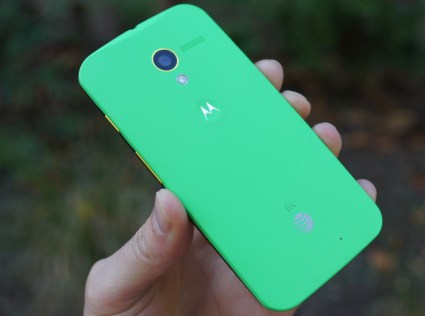
Sony Xperia Z1 vs. Samsung galaxy S4 vs. Moto X

Between IFA, the Samsung Galaxy Note 3 launch, and the iPhone launch next week, this is already shaping up to be one of the busiest months for mobile ever. And first to the plate is Sony, with its big new flagship, the Xperia Z1. The Xperia Z1 is a hulking handset with a waterproof design and a 20.7-megapixel camera sensor. It sounds impressive, but how does it compare to the Moto X and the Galaxy S 4, two of the top Android phones of the moment?

Size matters

Let’s just get this out of the way: While all of these phones feature a display of 5 inches or less, the Xperia Z1 is a big phone. It measures 5.66 by 2.91 by 0.33 inches and weighs 5.99 ounces. That’s considerably larger than the original 5.47 by 2.79 by 0.31-inch (HWD), 5.15-ounce Xperia Z, and a little disappointing since both phones have the same 5-inch display. Sure, some of that bulk is to make way for the larger camera sensor, but the trend right now is to make displays larger, without adding considerable size to the phone’s overall footprint. Compared to other 5-inch phones like the Galaxy S 4, the Xperia Z1 feels a bit large and heavy.

The Moto X, meanwhile, is the smallest phone of the bunch. But at 4.7-inches, it also has the smallest display. Overall I’d say the Galaxy S 4 has the greatest advantage here, as it features the largest display in the trimmest design. So if comfort is one of your primary concerns, you’ll definitely want to consider Samsung.
On the other hand, Sony is offering a design feature that neither Motorola norSamsung can match. The Xperia Z1 has been rated IP55 and IP58, which means that it is fully dust and waterproof. This phone is tougher than it looks, which makes it your best choice if you’re the type to accidentally take your phone out for a swim every once in a while.

Dueling displays

Now let’s get to the displays. The Galaxy S 4 and the Xperia Z1 are technically an even match, since each phone features a 5-inch, 1080p panel. But the Galaxy S 4 uses a PenTile pixel arrangement, which can make text and images look a little fuzzy. The Xperia Z1, on the other hand, uses Sony’s Triluminos and X-Reality display technology, which Sony claims makes for a wider color palette and automatically optimized image quality. I haven’t seen it in person, but just knowing that is isn’t PenTile means it should look a good deal crisper than the Galaxy S 4. And the Moto X display is perfectly nice, but at 4.7-inches and 720p, it doesn’t stand out.

Processing power

Now let’s look under the hood. On paper one thing is very clear: In terms of sheer power, neither the Moto X nor the Galaxy S 4 can compete with the Xperia Z, which is one of the first phones to use Qualcomm’s next-generation Snapdragon 800 processor. The Xperia Z1 uses a quad-core chip, with each core running at 2.2GHz. This part is already becoming standard for upcoming phones (like the Galaxy Note 3 and the LG G2), but it still blows away the competition from earlier this year. 

The Galaxy S 4 remains a good performer, with a 1.9GHz quad-core Qualcomm Snapdragon 600 chip, while the Moto X comes in last with an X8 processing system that uses a dual-core 1.7GHz Snapdragon S4 Pro processor.

Cameras compared

Things really heat up when you get down to the cameras. Sony is taking great pride in the Xperia Z1’s camera, calling it nothing short of “groundbreaking.” And with a 20.7-megapixel camera sensor, the Xperia Z1 certainly edges out the 13-megapixel Galaxy S 4 and the 10-megapixel Moto X. The Xperia Z1 uses a Sony G lens, with a 27mm angle and f/2.0 aperture, along with a custom-made 1/2.3-inch Exmor RS sensor and Sony’s Bionz mobile image processing engine.
But I’ve seen camera phones with some lofty megapixel ratings fail to deliver in the past (the first round of 13-megapixel camera phones comes to mind), so you shouldn’t judge a camera by megapixels alone. I’ve used the Samsung Galaxy S 4, and it has one of the better mobile cameras out there. And the Moto X has some cool software features, like the ability to start snapping photos within two seconds of taking the phone out of your pocket. So just how much better the Xperia Z1’s camera will be, if at all, remains to be seen.

A category a bit easier to call is battery life. The Xperia Z1 features a 3000mAh battery, which is the biggest of all three phones. That means it should last a bit longer than the Galaxy S 4, which has the same size screen but a 2600mAh battery. And while the Moto X has the smallest battery, at 2200mAh, it also has a smaller, lower-res display, so it doesn’t need as much power.

Software still matters

All three phones run Android 4.2.2 (Jelly Bean), with customizations from Motorola, Samsung and Sony, respectively. The Moto X and the Galaxy S 4 are available in either 16GB or 32GB variants, while the Xperia Z1 is only available in 16GB. On the other hand, the Moto X doesn’t have a microSD card slot, which the Galaxy S4 and Xperia Z1 do.
And if it seems like the Moto X has consistently been coming up short so far in this comparison, it’s not because it isn’t a good phone. On the contrary, the Moto X has a lot of unique features, like the ability to custom design the phone to your liking as well as some cool software tricks like touchless control that let you active Google Now just by speaking to the phone. It’s just tough to highlight features like these when you’re looking at things based purely on specs. 

Which to buy?

So while it seems like the Xperia Z1 is pulling ahead in many of these categories, there’s one major area where it might falter: availability. Don’t forget, Sony’s previous flagship phone, the Xperia Z, only launched on T-Mobile in the United States. Sony promises to make the Xperia Z1 available before the end of the month, but carriers and pricing have still not been announced. If it only launches on one carrier again, that cuts out a significant portion of its potential audience. Motorola and Samsung both have an advantage here, as both of their phones are available (or will soon be available) on all four major U.S. carriers, and then some.
And just to be clear, I didn’t forget the HTC One. Like the Galaxy S 4, the HTC One remains a formidable Android phone months after its initial release, which is becomingly increasingly difficult to do. I left it out of this roundup because it hasn’t held up in popularity like the Galaxy S 4 has, but it’s another great choice to consider.

So ultimately this is a tough one to call. If you want the latest and greatest in terms of hardware, the Xperia Z1 is your best bet. If you’re looking for something a little lighter and more user-friendly, it’s the Moto X all the way. And if you aren’t quite sure what you want, Samsung’s everything-but-the-kitchen-sink approach might make the Galaxy S 4 the right phone for you.